

UK military to field quantum clock within five years
- Europe
- News
- Tech
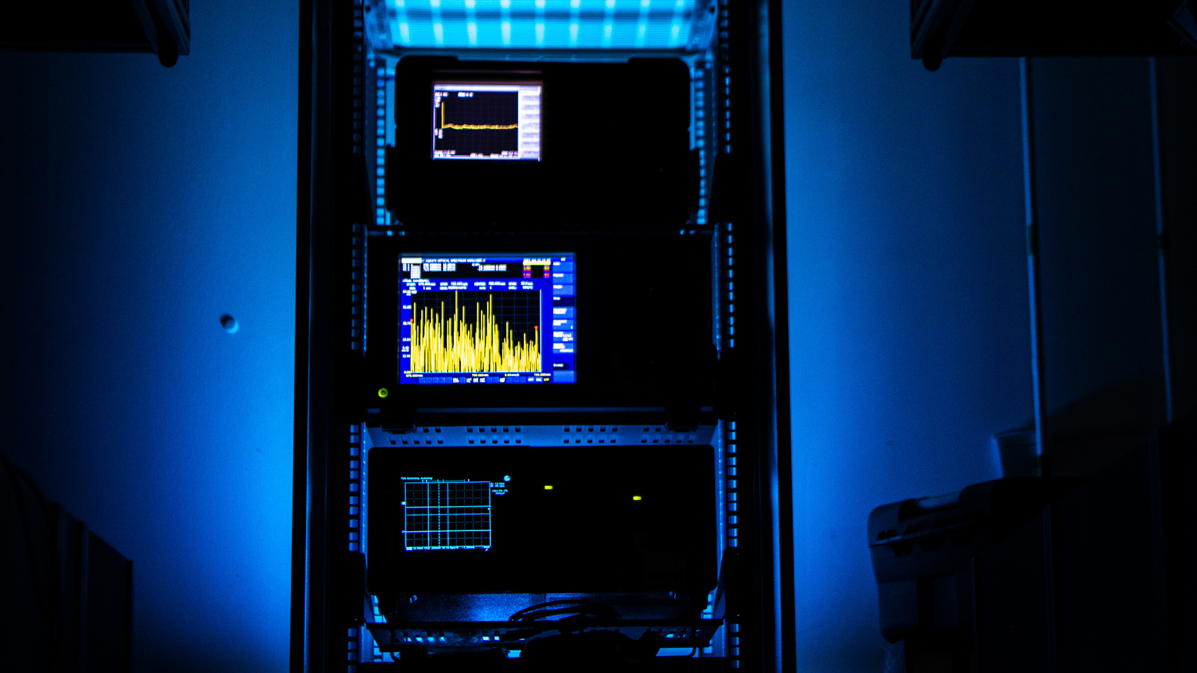
Experimental quantum technology looks set to bring new precision to UK military operations.
The UK military is set to field quantum-driven atomic clock technology within the next five years to boost its operational resilience.
Built in the UK by the Defence Science and Technology Laboratory (Dstl), the quantum clock will “be a leap forward” in capability, enhancing the security and precision of operations while reducing dependence on GPS, the authority announced on 2 January.
Developing this capability is “a signal to industry and academia that we are serious about exploring quantum technologies for secure and resilient operational advantage”, Dstl’s Chief Executive, Paul Hollinshead said in the announcement.
Companies – Infleqtion, Aquark Technologies, HCD Research, and Imperial College London – were involved in the trial to develop the quantum clock. According to Dstl, teams from Army Futures and the Royal Navy provided support.
“It’s becoming increasingly obvious that we need better and more robust position navigation and timing services, and that’s something that quantum is uniquely placed to be able to provide”, Infleqtion said.
The Ministry of Defence is eyeing a variety of applications for the technology, from secure communications to the enhanced accuracy of weapons systems. Dstl told DSEI that “first adoption will likely be in advanced radar systems and for positioning, navigation and timing in contested environments”.
In the meantime, there are “ongoing efforts” to miniaturise the technology for integration with military platforms.
)
)