

Royal Navy chief lays out warfighting readiness plan
- Europe
- News
- Naval
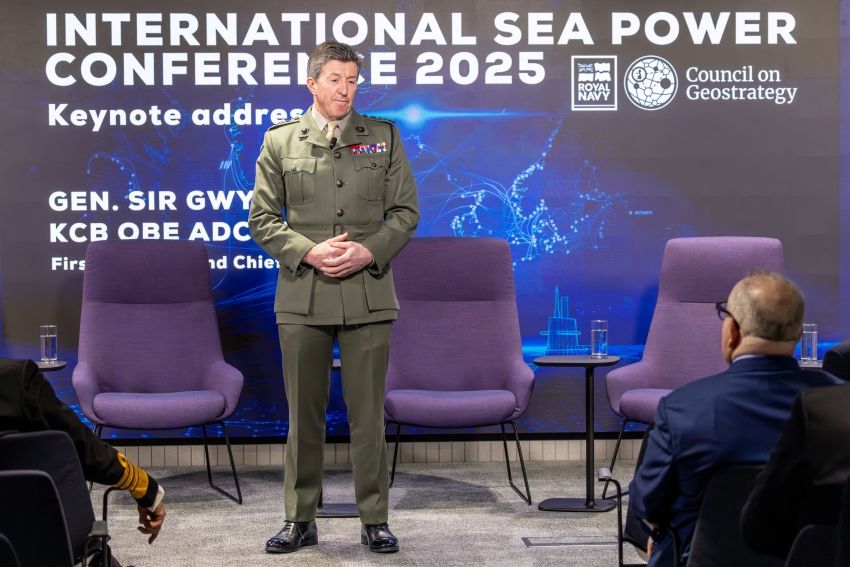
The five-pillar plan emphasises the need to shift to a hybrid and restructured force.
The Royal Navy’s (RN’s) First Sea Lord has laid out the service’s new plan to build warfighting readiness by 2029.
General (Gen) Sir Gwyn Jenkins launched the ‘Warfighting Ready Plan 2029’ at the navy’s International Sea Power conference in London on 8 December, noting that “the plan goes live within the RN as I’m speaking”.
At DSEI UK in London in September, Gen Jenkins – in his first speech as navy chief – listed warfighting readiness as one of his core priorities while in post, alongside nuclear deterrence, technology innovation, leadership, and agility.
Underpinning his plans to enhance warfighting readiness is the service’s new five-pillar plan, announced at the conference. The pillars include the following:
- Nuclear: assuring the UK’s submarine-based continuous at-sea deterrent as “the cornerstone of national security” and sustaining and strengthening its credibility and wider strategic stability, including through delivery of the navy’s next-generation submarines.
- Hybrid forces: transitioning to a hybrid navy with autonomously enabled, sustainable warfighting forces.
- People: building leadership, character, and competence to underpin warfighting excellence.
- Training: seeking training excellence through frequent and demanding activities (live or synthetic) requiring warfighting realism.
- Organisation: restructuring to deliver agility in battle and clarity in authority and establishing an organisational approach that generates lethal warfighting forces able to transition to, and conduct, war at speed.
Gen Jenkins told the conference the plan is built on extensive wargaming to understand strengths and weaknesses and the role allies will play.
In capability terms, “we’re already rolling out,” Gen Jenkins continued. “We have already moved on from our concepts to replace our LPDs [landing platform docks] as our landing ships.”
Instead, he added, the evolved concept will be “more distributed, smaller, with more autonomy” to match the Commando Force capability the service is already creating.
Underlining the importance of leadership and training alongside capability, Gen Jenkins said: “We need warfighting leaders, which is why we’ve embarked on a programme to revise the way we train our officers within the RN and Royal Marines.” Warfighting is a mindset and a discipline for action that is crucial to building deterrence, he added.
Gen Jenkins noted too that organisational change will help accelerate outputs. “The pace of the threat, the pace of technological change, demands a different approach,” he concluded.
)
)
)