

Rehabilitating Ukraine: How NATO is sustaining Ukraine’s military
- Europe
- Feature
- Medical
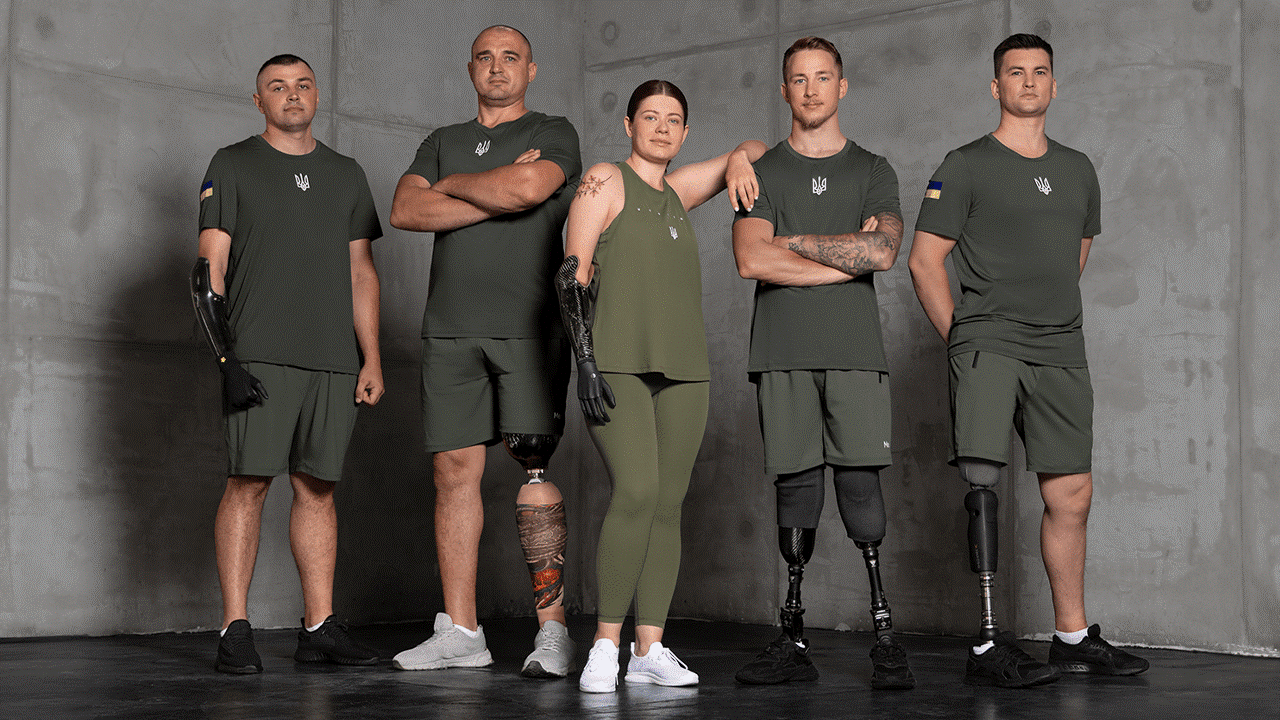
Medical support and rehabilitation are essential to sustain Ukraine’s ability to fight. DSEI Gateway speaks with key officials from NATO’s Operation Renovator to explore how it is supporting this need.
Nearly four years into Ukraine’s full-scale conflict with Russia, and much of the attention has been focused on the technology deployed by both sides. A less visible but equally vital element of the war continues under the surface – the battle to provide medical support and rehabilitation.
Ensuring Ukraine’s military can rehabilitate and reintroduce its soldiers back into battle is essential to sustaining Ukraine’s ability to defend itself.
A key initiative supporting this is Operation Renovator – a EUR100 million NATO project aiming to establish a network of medical rehabilitation centres across Ukraine.
Beginning in late 2023, the project forms part of a much wider NATO programme called the Comprehensive Assistance Package for Ukraine, which responds to the urgent non-lethal needs and requirements outlined by Ukraine, while supporting longer term capacity-building projects.
The core aim of Operation Renovator, specifically, involves establishing five medical rehabilitation centres across Ukraine.
Facility repairs, the acquisition of new medical equipment, training in the use of equipment, regular medical consultations on complex cases, and on the ground support and care are provided alongside with life-saving surgery, prosthetics, and training for Ukrainian medical specialists.
The purpose of the project is two-fold: Firstly, getting Ukrainian troops back to the frontlines where they are desperately needed; and secondly, restoring the lives of injured personnel for the long-term, allowing them to lead constructive, economically productive lives to support the country’s future.
The UK was the first country to become involved in Renovator, taking one of the five available rehabilitation locations, whilst agreeing to seek other NATO member states to sponsor and support the remaining sites.
To date, the UK’s contribution has included construction work on the UK-supported rehab centre, medical equipment deliveries, virtual medical consultations, and on-site training, Colonel (Col) Simon Doyle, the director of the UK’s Project Renovator told DSEI Gateway.
As the organisation leading the UK’s involvement, Defence Medical Services (DMS) has had a presence in Ukraine since 2024, Col Doyle said.
Lithuania and Norway followed shortly after the UK, supporting specific rehabilitation centres in Ukraine, before Sweden announced its participation in July 2025.
A single site remained available for support, with DSEI Gateway reporting on NATO and UK DMS efforts to find a fifth partner in early September.
A month later, Latvia announced its participation in Renovator, coordinating oversight of the final location, putting the operation on course to meet its full operating capability.
Now Operation Renovator is fully supported within its current remit; however, Col Doyle said the programme “could well expand” in the future, with “plenty to be getting on with” in the meantime. NATO manages decisions around the programme’s future and is constantly reviewing the programme for future opportunities.
What Renovator provides
When it comes to the activities occupying the UK Renovator team’s time, Verity Cannell, Occupational Therapist at DMS, told DSEI Gateway that their initial involvement centred around establishing a virtual training component. Although an array of supportive activities has been provided since.
The virtual training itself has been multi-disciplinary, involving occupational therapists, physical therapists, rehabilitation instructors, nurses, doctors, and speech and language therapists, she added.
Meanwhile, on the ground, UK clinical training specialists have helped support Ukrainian teams, by taking a mentorship and knowledge-sharing approach.
Alongside training, a fortnightly clinical advisory group was set up to aid the frontline team in treating complex cases, bringing in specialists from NATO member states.
Cannell explained that “vocational rehabilitation” has also been at the core of the UK’s Renovator work, helping prepare injured personnel for their life and continued service after recovery.
Aiding the pursuit of positive outcomes for the injured personnel has been the provision of a significant amount of equipment provided through Renovator, with Cannell highlighting prosthetic devices in particular.
These activities follow much of the facility-based rebuilding work which the UK and the other executive agent countries have taken, such as building work and repairs to increase the number of available wards in hospitals.
The challenges
At the top level, this would be “quite a conventional project” if it were in peacetime, Col Doyle said.
However, “in a conflict, and in a multinational environment with money from various sources, it is difficult”, especially with such complex traumatic injuries.
“The challenge remains the same as for many defence programmes and projects, which is getting mobilised, getting the commercial contractual agreements in place, and then layer on top of that, delivering to a war zone”, he added.
However, like many project managers, the main challenge Col Doyle cited is time. “That’s the real challenge, attempting to deliver these improvements within… an 18-month, two year, or less time frame”.
Cannell added to this, explaining that, on the ground “we haven’t seen this level of amputees since [the] conflicts [of] World War One, World War Two”, especially when it comes to the complexity of the cases seen.
Compounding these pressures is staffing. Ukraine’s war effort means that the availability of staff to help with the rehabilitation efforts is constrained when compared to the number of staff that might be available in a UK facility, for example.
Encouraging results
Despite these challenges, both Col Doyle and Cannell highlighted how rewarding Renovator is, not just from a human and personal perspective, but also in terms of the exchange of information and collaboration.
Cannell spoke to one particular case, which she said exemplifies the kind of effort the Renovator team help support on a daily basis.
“One morning we had one patient that [had] been waiting quite a long time to get an upper limb prosthetic. We brought the Koalaa [prosthetic device] in, we managed to fit it[and] show them and the team how to use it” she said, noting the human impact the equipment Renovator has helped provide.
“Within an hour he was writing his name and lifting a cup to be able to drink independently… [the impact of] getting people back to independent activity is huge.”
“The learning has been both ways on this project”, Cannell added, as DMS and the Renovator team now have a better understanding of what it means to treat complex injuries in wartime.
The work is “incredibly inspiring” Col Doyle said, adding: “I’ve got to say, in my 25 odd years in the army and defence – and my background is not medical – this is, by some distance, the most noble thing I’ve done.”
“For me, it’s been something really special in my career”, Cannell added.
)
)
)