
The future of procurement: why as-a-service is gaining ground
- Feature
- Procurement

While the ‘as-a-service’ model is common for software procurement, militaries are beginning to explore this approach to acquiring other military capabilities. DSEI Gateway speaks with the UK MoD and an industry leader to explore this approach.
Across the West, governments are attempting to reform defence procurement as they seek to rapidly rearm in an era of greater geopolitical instability. The ‘as-a-service’ model is one approach that has the potential to transform procurement, by enabling rapid equipment delivery, while reducing the risk and financial burden for defence ministries.
Broadly speaking, as-a-service for defence, commonly referred to as DaaS, involves capability (hardware or software) being provided to the armed forces as an on-demand, contracted service from companies – rather than the military buying and owning the equipment in its entirety.
Operating and sustaining the equipment is typically pushed onto the company, facilitating greater equipment flexibility and quicker technological advancements.
“In many instances, the as-a-service model means that the customer is procuring hardware, software, and a delivery solution… this means the customer doesn’t have to find the human resources to support the capability as it comes as a total solution with contractor support, James Passmore, the Vice President Director of Business Development and Sales at Saab UK, told DSEI Gateway.
The advantages are clear for militaries. No longer do they have to invest, develop, own, operate, and sustain capabilities on their own. However, it can place a greater risk burden on the company providing the service.
There are several different approaches militaries can follow when acquiring capability via the DaaS model.
- COCO: Contractor-owned, contractor-operated, which the US is leading the way in adopting.
- GOCO: Government-owned, contractor-operated – a lesser-known approach, meaning the government owns the capability while the company operates the technology on their behalf.
It is important to note that this DaaS model is already widely used by militaries to acquire software, known as ‘software-as-a-service’. Nevertheless, procuring other capability via this model is starting to gain traction with militaries as they look to accelerate procurement.
Spearheading adoption
The US Department of War is one of the best examples of how a military can utilise the DaaS model, specifically COCO, to access high quality capabilities rapidly, James Gavin, the Deputy Head of UK Defence Innovation spearheading novel approaches to procurement, informed DSEI Gateway.
The UK Ministry of Defence (MoD), he added, is closely studying their efforts to learn from their successes and challenges.
‘Intelligence-as-a-service’, in particular, lends itself well to DaaS, Gavin continued, noting that the US Government and many other militaries regularly acquire satellite data from companies. 20-30 years ago, this data would have only been provided by governments.
Iceye, a Finnish space technology company known for operating the world's largest constellation of small Synthetic Aperture Radar (SAR) satellites, provides its SAR data as-a-service to militaries, including Ukraine.

A SAR image of the Crimean bridge in Ukraine from one of Iceye's satellites. (Iceye)
“Companies are seeing the gaps in the market and are starting to offer their [satellite] services now”, Gavin said.
Momentum is building in this area. In December, a Rheinmetall–Iceye joint venture secured a EUR1.75 billion contract from Germany’s Bundeswehr (armed forces) to build and operate a sovereign, SAR satellite constellation through 2030. Notably ownership of the constellation will remain with the joint venture.
The sovereignty dilemma
While the advantages for militaries are considerable, DaaS raises questions about sovereign control.
An example that highlights this most acutely is Ukraine’s use of Starlink – SpaceX’s satellite communications constellation. Back in 2023, Ukraine requested Starlink to be turned on over Crimea, however, the CEO of the company Elon Musk refused Ukraine’s request, stating he wanted to avoid complicity in a “major act of war”.
The ability of a CEO to withhold access, which was being provided as-a-service to a military and funded by the US, highlights a critical national security concern.
This concern was echoed by the new head of MI6 – Blaise Metreweli – in December, who stated that “power itself is becoming more diffuse, more unpredictable” as control over critical technologies is “shifting from states to corporations, and sometimes to individuals”.
Acknowledging these concerns, Gavin said that the UK MoD is currently debating whether it risks “losing equity” when data is provided by foreign governments or companies.
However, he countered this point by emphasising that the choice often comes down to having access to data or having none at all – a clear decision. Data supplied by industry, he added, is also often easier to share, as it can have lower classification levels.
Quality of service
Another concern militaries must be aware of is the quality of service delivered, considering the company typically owns and operates the capability, Gavin said, adding that there have been several examples in the past where outsourcing to companies has led to lower quality.
One way to ensure quality of service, he continued, is to hold companies to account for delivering outcomes and mission requirements.
It is also important to highlight that the potential drawbacks are not just limited to the customer. From a company perspective, it can make them more financially exposed “as much of the risk remains with us”, Saab’s Passmore acknowledged, adding that this requires companies to stipulate a “minimum level of usage to ensure our sunk costs are covered”.
Despite these concerns, DaaS deepens the partnership between industry partners and defence ministries – a core objective for governments globally.
Future use cases: undersea and beyond
This deepening partnership is a key objective for the UK Government in particular. To achieve this, the government plans to integrate industry partners more closely into equipment programmes, Gavin said, shifting their role from one that involves delivering “tasks” and capabilities to one defined by operational “outcomes”.
One example of how this could be realised through the DaaS model is in countering the growing undersea threat, where industry would deploy and operate a persistent network of uncrewed sensors on behalf of the Royal Navy.
This approach is already beginning to materialise. In December, the head of the Royal Navy, General Sir Gwyn Jenkins, confirmed that the first phase of the Atlantic Bastion programme will be delivered in 2026 under an as-a-service COCO, naval oversight model.
Atlantic Bastion is a new programme aiming to counter rising Russian undersea threats by deploying a blend of uncrewed systems and sensors with traditional warships.
More projects such as Atlantic Bastion could adopt the DaaS model, pending the UK’s upcoming Defence Investments Plan – due in early 2026 – Gavin said.
The app store for defence manufacturing
While Atlantic Bastion highlights the shift towards adopting DaaS to deliver military capability, defence technology company Tiberius Aerospace is scaling this logic across the entire industrial base with its new Grail supplier-pooling platform – delivering manufacturing-as-a-service at system level.
Often described as an “app store for defence”, Grail is more accurately understood as an operating system for defence production. It provides a secure, centralised digital environment where defence ministries, primes, and authorised developers can upload requirements and designs, enabling faster spiral development across a distributed industrial network, Blythe Crawford, the Director of Grail and former Commandant of the Royal Air Force's Air and Space Warfare Centre, explained to DSEI Gateway.
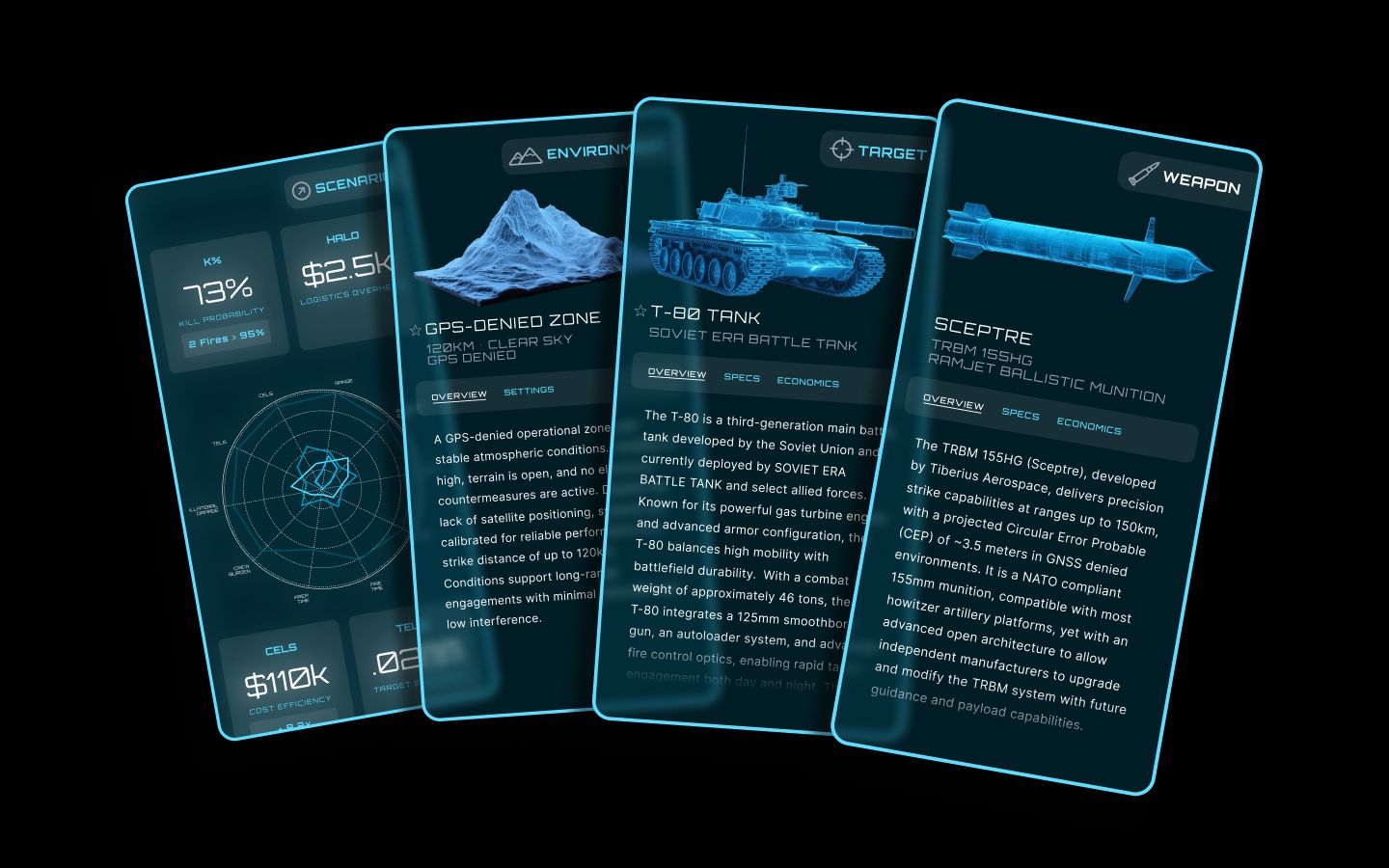
Tiberius Aerospace's Grail supplier-pooling AI-enabled platform. (Tiberius Aerospace)
As designs are uploaded and iterated on by companies using the platform, Grail’s AI models can analyse production quality, delivery speed, failure rates, and system performance. This, Crawford said, gives decision-makers insight into what works in practice, what can scale quickly, and which capabilities are most likely to deliver battlefield advantage.
Essentially, a single contractor no longer has to own the entire production chain, drawing instead on a federated pool of pre-vetted manufacturers. This benefits companies of all sizes, including small enterprises, allowing capability to scale at speed without rebuilding industrial capacity from scratch, he added.
Inevitably, this raises questions around intellectual property. Crawford acknowledged this concern but argued that in a fast-moving technological environment it is less constraining than often assumed. Instead, it “breeds competition and collaboration simultaneously”.
This platform highlights the innovative ways the DaaS model can be adopted to benefit the whole sector, not just the military. Therefore, wider adoption of the DaaS procurement model will be critical for defence as a whole. By sharing responsibility between government and industry, DaaS enables capable and innovative technologies to be delivered to the warfighter at pace, avoiding the protracted, multi-year acquisition programmes that continue to constrain military modernisation.
Considering the clear benefits and commercial advantages, expect to see more defence ministries adopting the DaaS model to acquire military capability in 2026 onwards as they seek faster, more flexible, and more resilient ways to generate combat power.
)
)
)